

That blue light at the dentist.
It’s called a curing light. In a few seconds, it decides whether your filling hardens properly.
General information, not dental advice. Your dentist knows your mouth; we measure curing lights.

It hardens
your filling.
Tooth-colored filling material goes in soft, so the dentist can shape it. The curing light hardens it.

It can feel warm.
Say so.
Curing lights are powerful, and light becomes heat. Used for too long in one spot, a strong light can overheat the gum and the tooth. Dentists manage this by curing for the time the material calls for and pausing between cycles so the heat can dissipate.
If it feels hot, say so or raise your hand. A short pause is easy, and your dentist would rather know.

Why the
orange shield.
Your dental team uses orange shields or glasses because the light is very bright; if you’re worried about your eyes, ask them.
Why a filling sometimes fails early.
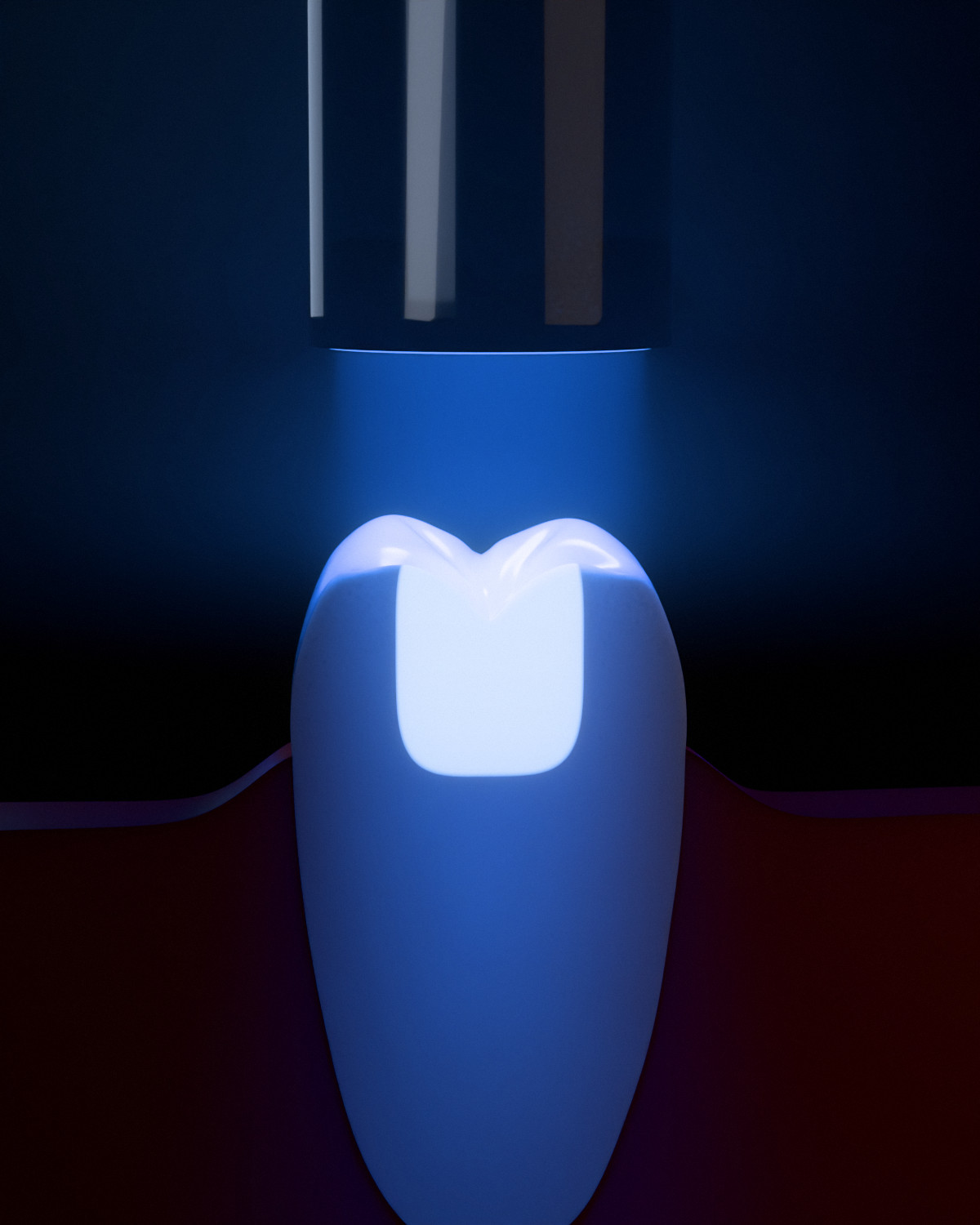
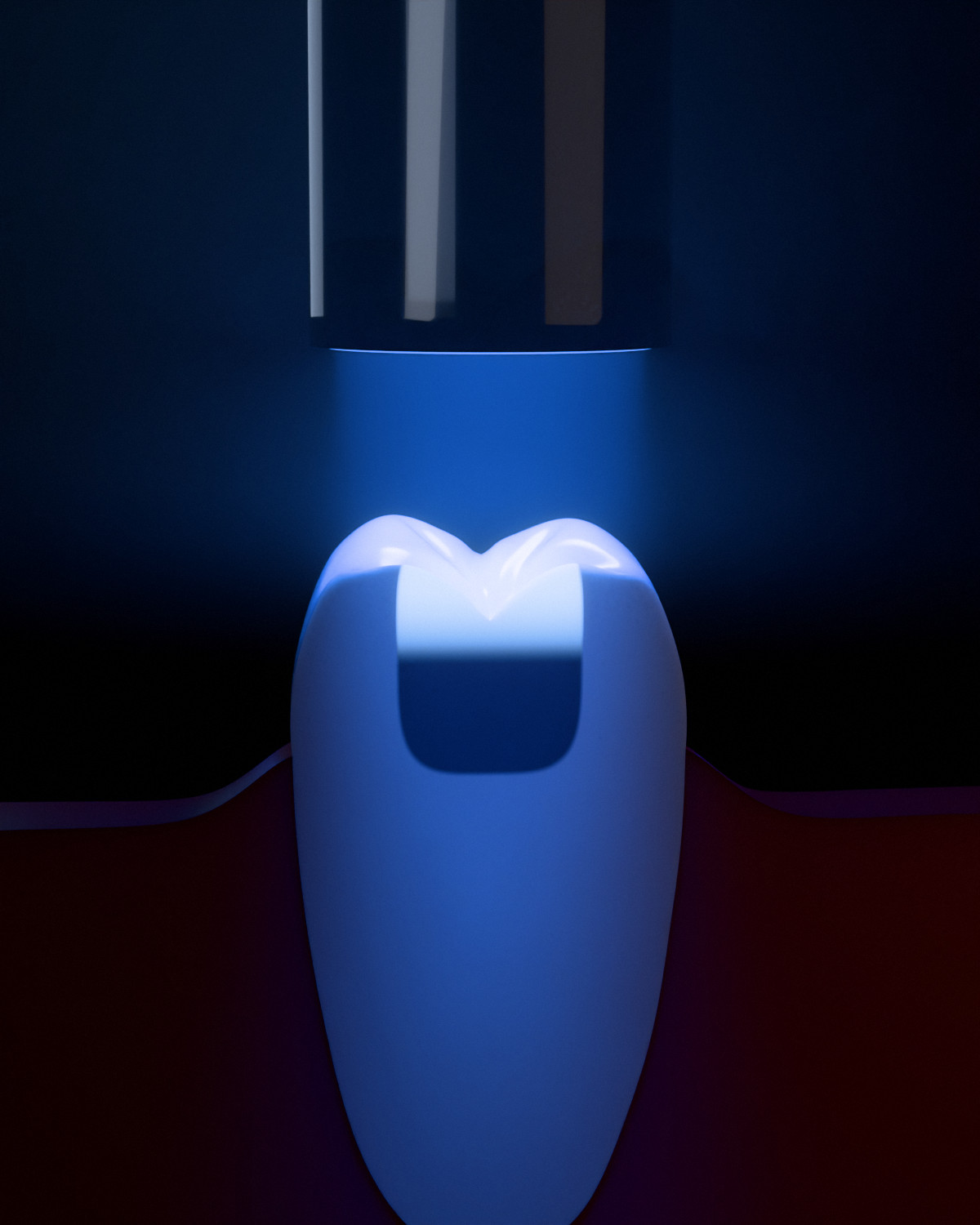
A filling can fail for many reasons, and only your dentist can tell you why yours did. One of them is light: if a filling doesn’t get enough light energy, it may not harden fully. Under-cured fillings are associated with discoloration, debonding (coming loose), fracture and excessive wear, and can be one cause of sensitivity after treatment.
This isn’t about care or skill alone. Every curing light loses output with use, and the blue glow looks the same when it does. The only way to know what a light delivers is to measure it.
Is the light regulated?
Curing lights are medical devices. In the United States, the FDA reviews them before they can be sold.
In September 2026 the FDA updated its guidance for these lights. Among other things, it says the instructions that come with a curing light should include “Instructions on how to periodically check the irradiance output”, meaning how to check that the light still delivers what it should.
So “When was it last tested, and how?” is a fair question, and a good practice will have an answer.
Five friendly questions to ask your dentist
Good practices are glad to answer these. None of them is a test; they’re the same things we help dentists check.
“Who makes your curing light, and how old is it?”
Manufacturers state how much light each model should deliver. Knowing the make and age is the starting point for checking it.
“When was it last tested, and how?”
Lights lose output gradually. Many practices check theirs at least once a year; some use a handheld meter, others have them measured with laboratory-grade equipment.
More on this: How often should you test a dental curing light?
“Is the curing time matched to the filling material you’re using?”
Each material’s instructions say how much light it needs. A light that’s working can still be too weak, or the time too short, for a particular material.
“Do you use a protective cover on the light, and was it tested with the cover on?”
Covers keep the light clean between patients, which matters. Some also block a little of the light, so it’s worth measuring with the cover in place.
More on this: Do curing light barriers reduce light output?
“Who holds the light, and how do they keep it close and steady?”
The light does its job when the tip is close to the filling and held still for the full time. Who is allowed to do this varies by region; what matters is that they’re trained to.
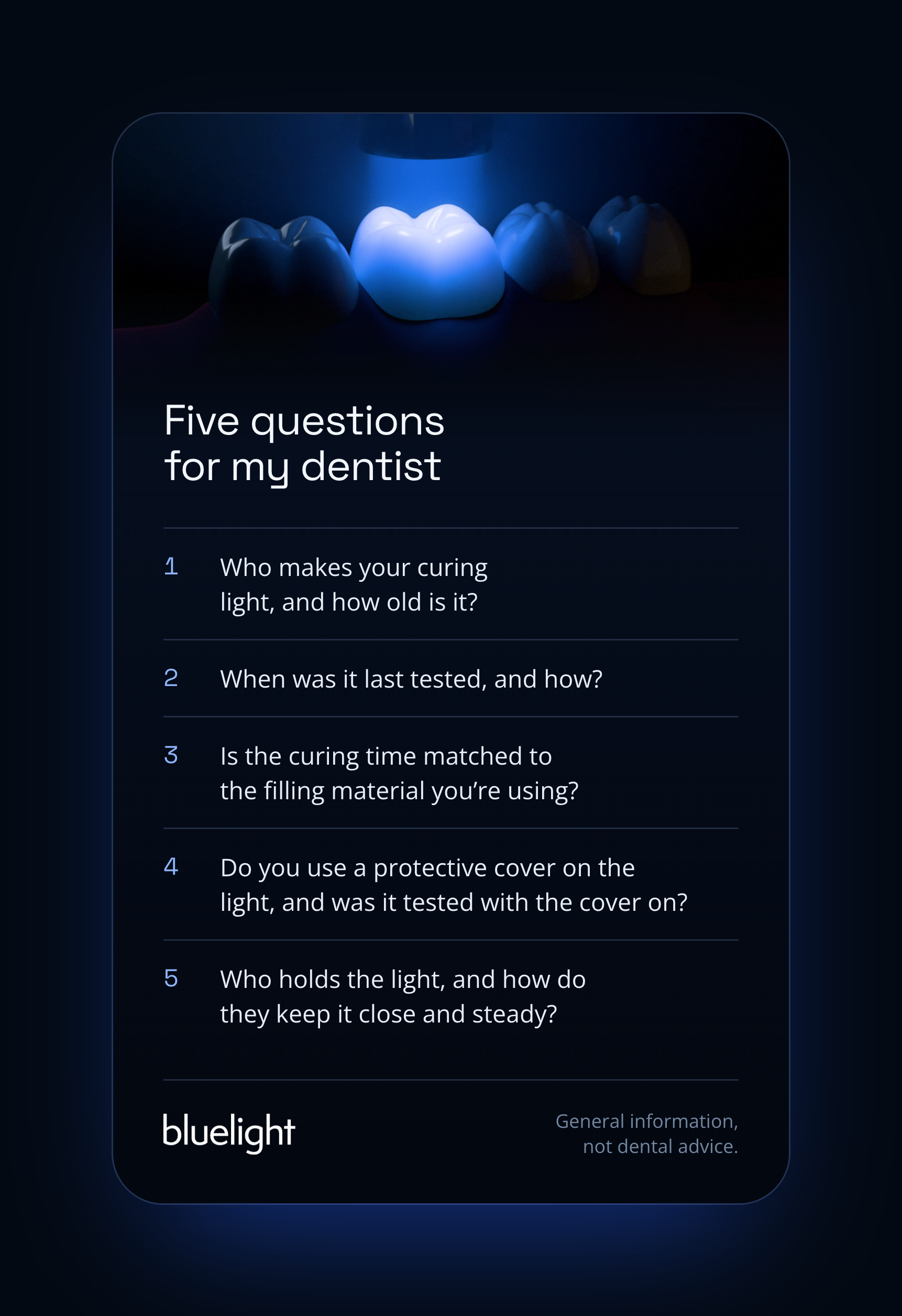
Five questions for my dentist
- Who makes your curing light, and how old is it?
- When was it last tested, and how?
- Is the curing time matched to the filling material you’re using?
- Do you use a protective cover on the light, and was it tested with the cover on?
- Who holds the light, and how do they keep it close and steady?
General information,not dental advice.
For dental teams
If a patient brought you this page: every one of these has a measurable answer. A free CheckMARC evaluation measures each curing light in your practice, at the tip and at 6 mm, and gives you cure times for the materials you use.